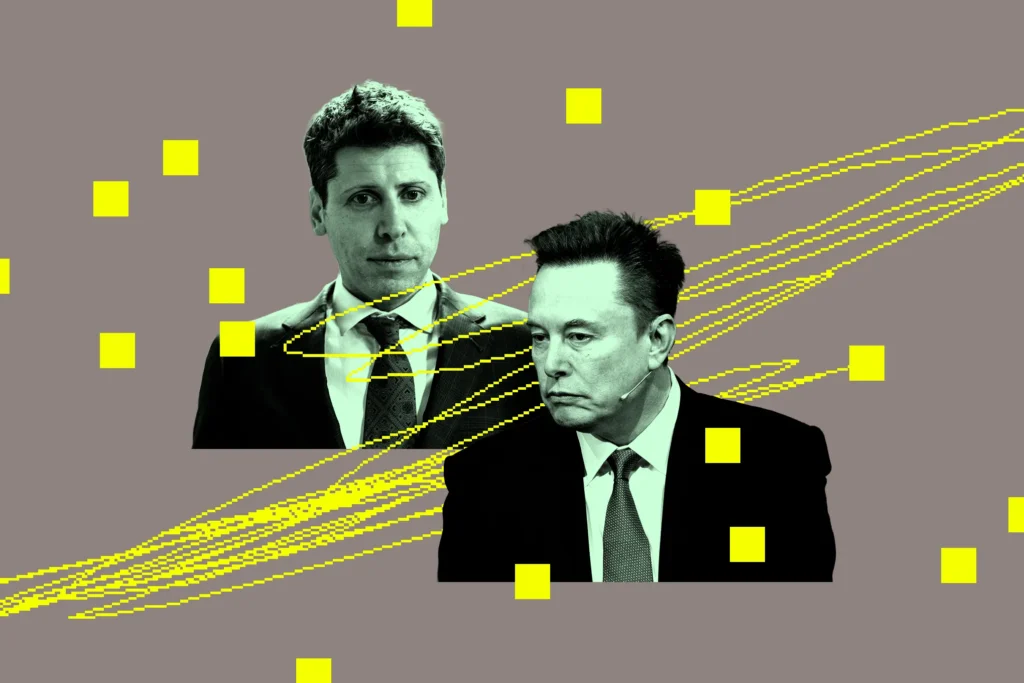

The Musk v. Altman trial kicked off, and the evidence docket is already more entertaining than most tech depositions. Court exhibits are trickling out—emails, photos, corporate docs—from the days when OpenAI was still a nameless idea floating around a few smart people’s heads.
Here’s what’s surfaced so far, and some of it is genuinely surprising.
Jensen Huang basically handed them a supercomputer. Nvidia’s CEO gave OpenAI an in-demand DGX-1 machine before the lab even had a proper name. That’s not a small favor—those things were gold dust in the mid-2010s, and Huang didn’t ask for equity or a board seat. He just dropped it off. I’d love to know what he thought he was getting out of it, because right now it looks like pure patronage.
Elon Musk wrote most of the mission statement. The early founding documents show Musk’s fingerprints all over OpenAI’s original purpose. He shaped the non-profit structure and pushed the “safe AGI for humanity” framing harder than anyone else. That’s ironic given where he stands today, suing Altman for allegedly abandoning that very mission. But the paper trail says Musk was the one who drafted it.
Sam Altman wanted Y Combinator to be the backbone. Emails show Altman pushing hard to anchor OpenAI inside YC’s orbit. He saw Y Combinator’s network as the fastest way to recruit talent, secure early funding, and build credibility. Greg Brockman and Ilya Sutskever were less enthusiastic—they worried that tying OpenAI too closely to Y Combinator would give Musk outsized control. Turns out they were right to be nervous, just about the wrong person.
The exhibits also reveal how messy the early negotiations were. Musk wanted a different governance model. Altman wanted more autonomy. Brockman and Sutskever were caught in the middle, trying to keep the project from imploding before it started. There’s a reason OpenAI’s structure ended up so convoluted—it was a compromise nobody was happy with.
One email that caught my eye: Brockman expressing concern that Musk’s involvement might “overwhelm” the other founders. He wasn’t wrong. Musk’s presence tends to warp any room he’s in, and a small AI lab in its infancy was no exception. The tension between wanting his resources and fearing his control was baked in from day one.
Ilya Sutskever, who later led the safety team that tried to oust Altman, comes across in these early exchanges as the most cautious voice. He kept asking hard questions about governance and decision-making. The guy was skeptical from the start, and maybe that skepticism was justified.
This is just the first wave of evidence. The trial will drag on, and more documents are bound to leak. But already the picture is clearer: OpenAI was never a clean, unified vision. It was a patchwork of competing egos, generous favors, and uneasy compromises. The lawsuit might not settle who’s right, but it’s definitely settling the historical record.
I’ll be watching the next batch of exhibits closely. If the early days were this messy, the later ones are going to be a goldmine.
Comments (0)
Login Log in to comment.
Be the first to comment!