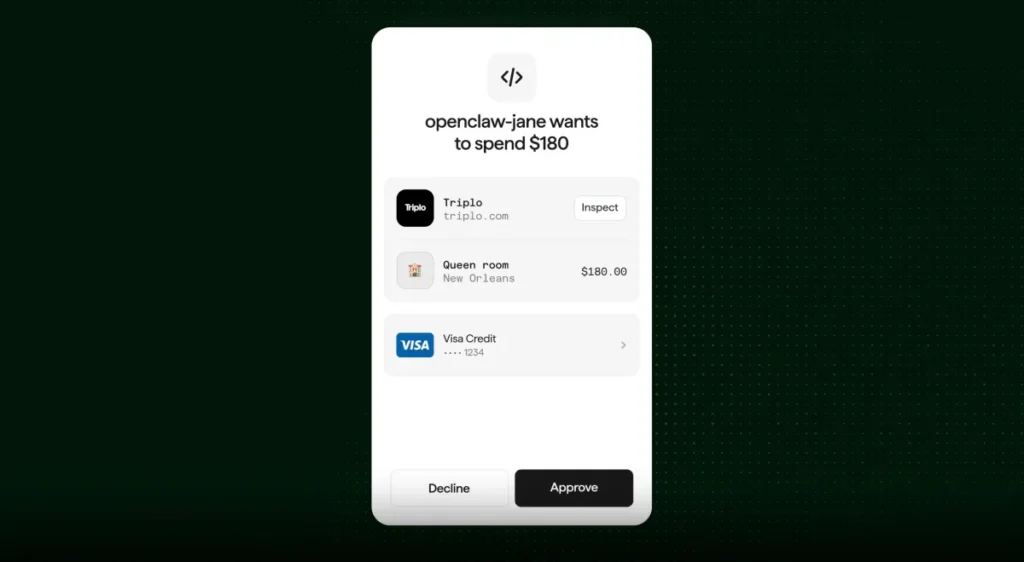

Stripe just made its Link wallet a lot more useful for anyone who’s been experimenting with AI agents that need to buy things. The company announced today that Link, which already handles stored cards, bank accounts, and subscriptions for human users, now supports autonomous AI agents with custom approval flows.
This is one of those announcements that sounds dry on paper but actually addresses a real pain point. If you’ve tried to let an AI agent book a flight, order supplies, or pay for an API subscription, you’ve probably run into the problem of giving it too much access or none at all. Link’s approach is to let you authorize specific spending limits and approval rules, so the agent can act without you having to rubber-stamp every single transaction.
The way it works is straightforward. You connect your payment methods to Link, then set up an “agent profile” with spending caps, merchant whitelists, and approval triggers. When the agent needs to pay for something, Link checks the request against those rules. If it’s within bounds, the payment goes through. If it’s above a threshold or to an unfamiliar vendor, you get a push notification to approve or deny.
This is higher than I expected from Stripe in terms of practical AI integration. A lot of companies are still trying to figure out how to let AI agents spend money without creating a security nightmare. Stripe’s solution isn’t revolutionary — approval flows have existed for corporate cards and parental controls for years — but applying them to AI agents in a structured way is smart. It keeps the human in the loop without requiring constant babysitting.
What I like about this is that it doesn’t pretend AI agents are ready to be fully autonomous with your wallet. Stripe is being realistic: let the agent handle routine, low-risk payments, but flag anything unusual. That’s the right balance for 2026. The technology isn’t there yet to trust an AI with unlimited spending authority, and pretending otherwise would be irresponsible.
There are some limitations worth noting. Link is US-only for now, though Stripe says international expansion is on the roadmap. You also need to have a Link account already set up, which means this only helps if you’re already in Stripe’s ecosystem. And the approval flow is currently limited to push notifications — no SMS fallback, no email-based approvals. If you miss the notification, the payment just fails.
But for developers building AI agents that need to buy things, this removes a major friction point. Instead of building custom payment infrastructure or handing over API keys with unlimited access, you get a managed solution that Stripe handles. I’ve seen teams hack together solutions using prepaid cards with low balances or virtual card APIs, but those are brittle. This is cleaner.
Stripe is also positioning this for business use cases, not just consumer wallets. Think about an AI procurement agent that orders office supplies, or an AI research assistant that pays for data subscriptions. The approval flows can be tied to team budgets and manager oversight, which makes it viable for companies that are nervous about letting AI touch their payment systems.
The timing makes sense. AI agents are moving from demo projects to production deployments, and payments are one of those boring but essential pieces that nobody wants to build from scratch. Stripe has the infrastructure and the trust to make this work. Whether other wallet providers follow suit remains to be seen, but this feels like the kind of feature that will become table stakes within a couple of years.
Comments (0)
Login Log in to comment.
Be the first to comment!