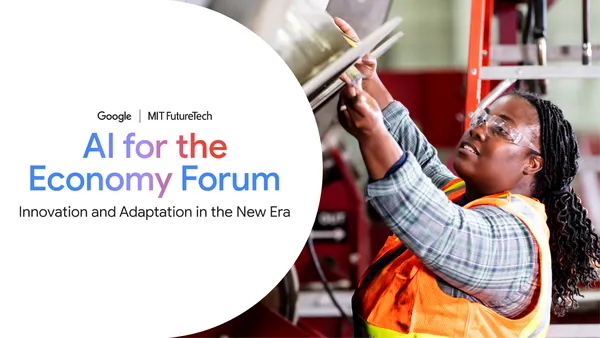

Google and MIT FutureTech just wrapped up their first AI for the Economy Forum in Washington D.C. The premise is refreshingly honest: AI’s effects on jobs and the economy aren’t preordained. We get to shape them, but that requires companies, workers, governments, and researchers to actually talk to each other instead of shouting past each other.
I’ve been to enough of these forums to know they can easily turn into virtue-signaling echo chambers. But Google’s announcements today suggest they’re putting actual money behind the rhetoric. Two big buckets: research funding and training programs.
Research money with strings attached
Google’s AI & Economy Research Program is funding external economists through a Visiting Fellows program. MIT’s David Autor is already on board. The early findings from Ben Armstrong and Julia Shah (also MIT) are worth noting: AI works best when it reduces drudgery, promotes learning, and fosters collaboration. That sounds obvious, but most enterprise AI deployments I’ve seen focus on surveillance or cost-cutting instead. The research confirms what practitioners have been saying for years.
Google.org is also handing out Google Cloud credits and direct funding to a global cohort studying AI’s impact on labor markets, manufacturing, and healthcare. They’re even looking at the economics of AI agents—which is timely, given how many startups are rushing to deploy autonomous agents without understanding the second-order effects.
Academic advisors include Nobel Laureate Michael Spence, Cambridge’s Dame Diane Coyle, and former PIMCO CEO Mohamed El-Erian. That’s a heavyweight lineup, though I’d have liked to see someone from organized labor on the list.
Training programs that might actually help
On the training side, Google is funding programs for healthcare workers and creating apprenticeships in high-demand fields. The details are sparse in the original announcement, but the direction is right. Generic “AI literacy” courses don’t cut it anymore. People need specific, job-relevant skills, and apprenticeships are one of the few models that actually work.
I’m skeptical about how scalable these programs are—Google’s track record with training initiatives has been mixed—but the focus on healthcare is smart. That sector is drowning in administrative burden, and AI tools that genuinely reduce paperwork could free up clinicians for actual patient care.
The unspoken tension
What the forum didn’t address directly is the tension between productivity gains and job displacement. The research they’re funding might eventually answer those questions, but the timeline matters. AI adoption is accelerating faster than policy can keep up. The forum’s emphasis on “partnership” is nice, but partnership without power-sharing is just consulting.
Still, I’ll give Google credit for starting the conversation with actual investments rather than just another white paper. The Visiting Fellows program and the global research cohort are concrete steps. Whether they lead to real change depends on whether the research findings actually influence policy and corporate behavior.
For now, the forum feels like a necessary first step. The real test will come when the research is done and the training programs scale. That’s when we’ll see if the promises match the reality.
Comments (0)
Login Log in to comment.
Be the first to comment!