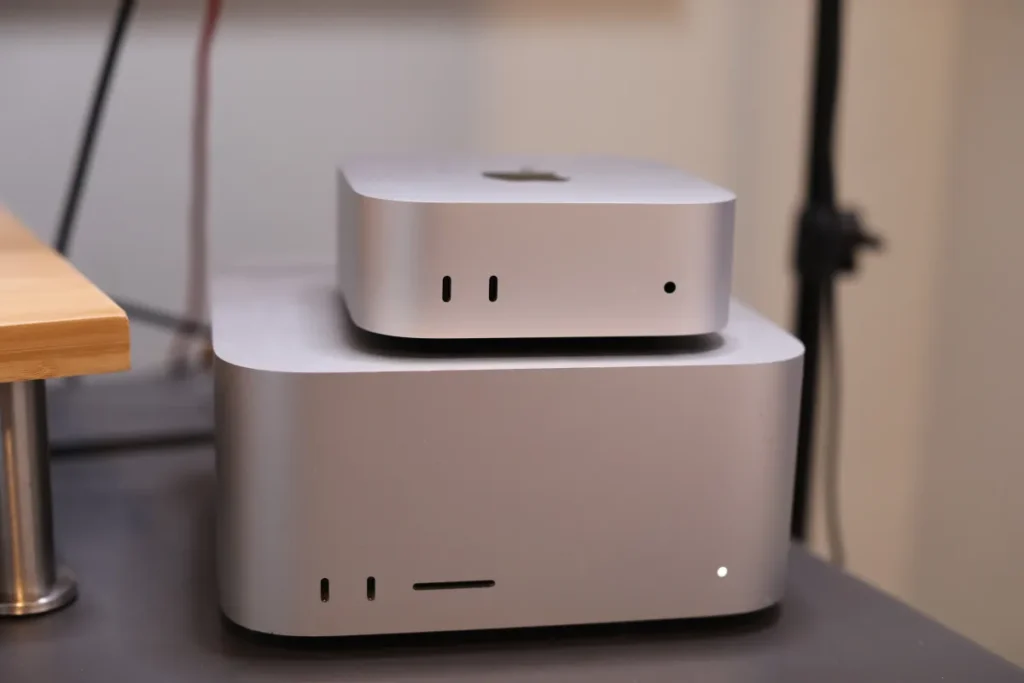

So the Mac mini is officially the hottest item you can’t buy right now. Apple’s little shoebox of a computer has been sold out for weeks, and if you check eBay, you’ll find listings priced hundreds over retail. This isn’t some supply chain hiccup from a random component shortage. The demand is being driven by something specific: people running local AI models.
I’ve been watching this unfold for a month or two, and it makes sense once you think about it. The M-series chips in the Mac mini—especially the M2 Pro and M4 models—have surprisingly good neural engine performance and unified memory. That unified memory is key for AI workloads. You can load up a 7B or 13B parameter model locally without the whole thing crumbling, and the power efficiency means you can leave it running 24/7 without your electricity bill screaming.
So what’s happening? Developers, researchers, and hobbyists who want to run Llama, Mistral, or any of the open-weight models locally are snapping up Mac minis. They’re cheap compared to a Mac Studio or a tricked-out MacBook Pro, and they don’t need a dedicated GPU setup. Plug it in, install Ollama or LM Studio, and you’re running inference in minutes. No cloud costs, no API keys, no data leaving your desk.
Apple clearly didn’t see this coming. Their supply chain is built around predictable demand cycles—back-to-school, holiday season, enterprise refresh cycles. They didn’t budget for a wave of AI enthusiasts treating the Mac mini like a tiny inference server. So now the lead times on Apple’s own site stretch weeks, and third-party retailers are either sold out or quietly raising prices.
Enter the flippers. eBay is currently littered with Mac minis at 20-30% above MSRP. Some listings are obvious scalps—open box units with the plastic still on, priced like they’re rare collectibles. Others are more subtle, bundling in extra RAM or storage upgrades and pretending that justifies the premium. I saw one listing for a base M2 Mac mini at $799, which is $200 over retail. Bold move for a machine that costs $599 new.
The irony is that Apple probably benefits from this in the long run. The Mac mini was always a bit of a forgotten product, overshadowed by the MacBook Air and the iMac. Now it’s getting a reputation as the go-to local AI box. That’s free marketing, and it might actually drive more software developers to build for Apple Silicon instead of just targeting Nvidia CUDA setups.
But for anyone trying to buy one right now? You’re stuck. Either pay the scalper tax, wait weeks for Apple to restock, or look at alternatives like a used Intel NUC with a discrete GPU. The NUC route is cheaper upfront but eats more power and runs hotter. I’d rather wait.
This whole situation reminds me of the Raspberry Pi shortages during the pandemic, but with higher stakes and pricier hardware. It also shows how quickly hardware demand can shift when a new use case emerges. Nobody predicted that a quiet desktop meant for casual users would become the default tool for running local LLMs. But here we are, refreshing Apple’s store page like it’s a ticket drop.
If you’re in the market for a Mac mini specifically for AI work, my advice is to be patient. The M4 model is worth waiting for—better neural engine, more memory bandwidth, and it’s not like the flippers are offering any real value. Let the frenzy cool down, or look at refurbished units directly from Apple. They come with a warranty and don’t feed the scalpers.
Meanwhile, I’m curious to see if Apple acknowledges this demand in their next earnings call or if they quietly adjust production. Either way, the Mac mini just got a new identity, and it’s not the one Apple planned.
Comments (0)
Login Log in to comment.
Be the first to comment!