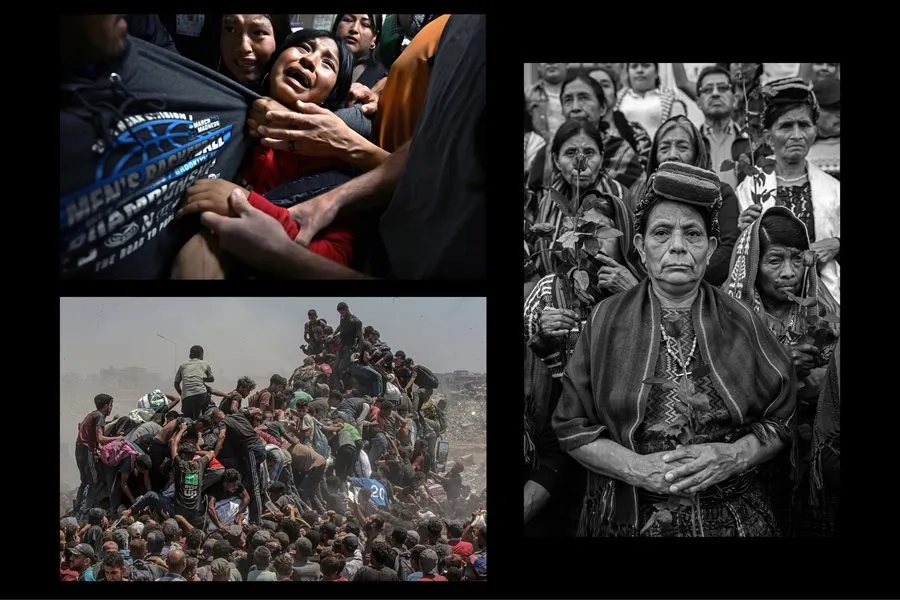

The World Press Photo competition has been wrestling with the same question the rest of us are: what counts as a photograph now that generative AI can produce something that looks like one? The 2026 winner gives a pretty clear answer.
Carol Guzy took the top prize with “Separated by ICE,” a shot of children clinging to their father after an immigration hearing. It’s the kind of image that doesn’t need a caption to hit you in the gut. You see the fear, the desperation, the physical clinging of kids who don’t want to let go. That’s not something a diffusion model can fake, no matter how good the prompt.
The organization behind the award has specific rules about AI tool usage. No generative fill. No synthetic elements. No “enhancing” reality with a text prompt. If you want to compete, you have to play by the old rules where the camera captures what’s actually in front of it. Given how many photo contests have been embarrassed by AI-generated entries recently, this clarity is refreshing.
What’s interesting is that Guzy’s photo wouldn’t be more powerful if it were technically perfect. It’s grainy, chaotic, and framed like a moment caught rather than composed. That’s the whole point. The best photojournalism has always traded polish for authenticity. AI images tend to be too clean, too balanced, too “correct” in ways that real life never is.
I’ve been watching how different competitions handle this. Some banned AI outright. Others created separate categories. World Press Photo chose the most sensible path: define what a photograph is and enforce it. If you use AI tools that alter the reality of the scene, you’re out. Simple.
The full story has more details on the specific rules, but the takeaway is straightforward. The competition is saying that a photo is still a capture of something that happened, not something that was generated. It’s a distinction that sounds obvious but apparently needs restating in 2026.
Guzy’s win is a reminder that the most powerful images come from being in the right place at the right time with a camera, not from typing the right words into a text box. That’s not going to change, no matter how good the AI gets.
Comments (0)
Login Log in to comment.
Be the first to comment!