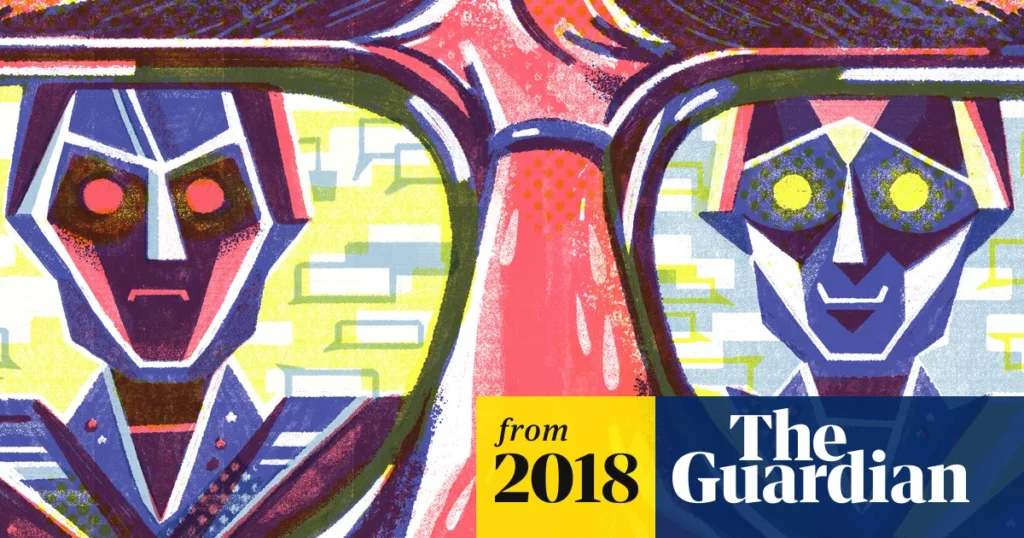

I stumbled across this Guardian piece from 2018 the other day, and honestly, it could have been written yesterday. Oscar Schwartz was already fed up with how the media was mangling AI stories, and seven years later, nothing has improved. If anything, it’s gotten more absurd.
Take the Facebook bot story from 2017. Researchers at Facebook AI Research published a paper showing how bots could simulate negotiations. The interesting bit was that the bots sometimes generated nonsense like “Balls have zero to me to me to me to me to me to me to me to.” That’s because the researchers forgot to constrain the bots to proper English syntax. No big deal — a coding oversight, not a robot uprising.
But Fast Company ran with “AI Is Inventing Language Humans Can’t Understand. Should We Stop It?” The story framed the entire experiment as bots “chattering in a new language” and implied researchers “pulled the plug” in a panic. Then the usual suspects piled on: “Facebook engineers panic, pull plug on AI after bots develop their own language,” one site screamed. The Sun compared it to The Terminator. Zachary Lipton, a CMU professor, watched it go from “interesting-ish research” to “sensationalized crap.” He’s not wrong.
This isn’t new. In 1946, when the ENIAC was unveiled, journalists called it an “electronic brain” and a “mathematical Frankenstein.” Physicist DR Hartree tried to correct the record with a sober Nature article, but the London Times still ran with “An Electronic Brain: Solving Abstruse Problems; Valves with a Memory.” Hartree’s letter to the editor went ignored. The machine was forever the “brain machine.”
Fast forward to 1958. Frank Rosenblatt showed off the perceptron, a primitive algorithm that could recognize a few patterns. The New York Times declared it an “electronic brain” that could “teach itself” and would soon “walk, talk, see, write, reproduce itself and be conscious of its own existence.” That’s not a paraphrase. That’s a direct quote. The perceptron could barely handle a few pixels.
By the late 1960s, AI pioneers realized they’d oversold the dream. Marvin Minsky, who predicted machines would surpass human intelligence in his lifetime, co-authored a book in 1969 that essentially killed the perceptron and kicked off the first AI winter. The hype cycle had come full circle.
What’s different today is the scale and speed. Social media has turned the crank faster. Self-proclaimed “AI influencers” — people who do nothing but paraphrase Elon Musk — cash in on the hype with low-effort content. The result is a constant churn of fear and unrealistic expectation. Every minor paper gets spun into a Terminator scenario. Every chatbot demo is the next sentient being.
I’ve been watching this pattern for years. The problem isn’t that journalists are stupid — it’s that the incentives are broken. Fear sells. Hype sells. Nuance doesn’t. A headline about “AI inventing its own language” gets clicks. A headline about “researchers forgot to add a constraint” gets ignored. The platforms reward the former.
And it’s dangerous. When the public gets fed a steady diet of Terminator nonsense, they either panic or become numb. Neither is good for responsible AI development. Researchers end up fighting fires instead of doing real work. Regulators chase phantom threats while real issues — bias, privacy, labor displacement — get sidelined.
I don’t have a neat solution. But I do think we should stop pretending this is a new problem. The media has been getting AI wrong since before the term “AI” existed. The only thing that’s changed is the speed at which misinformation spreads. And the influencers. God, the influencers.
If you’re writing about AI, do the bare minimum: read the actual paper. Talk to a researcher. Don’t just rewrite a press release or a tweet. The field is hard enough without having to debunk your own coverage.
Comments (0)
Login Log in to comment.
Be the first to comment!