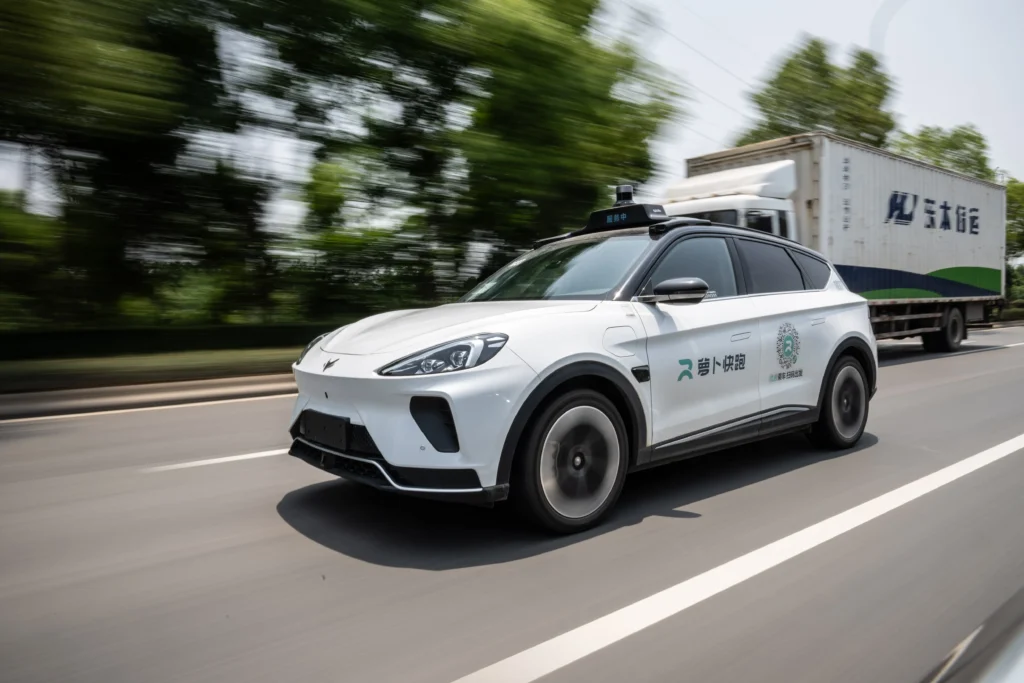

China has quietly pulled the plug on new robotaxi licenses. Bloomberg reports that regulators have stopped issuing permits for autonomous vehicles after a very public failure in Wuhan last month.
The incident: dozens of Baidu Apollo Go robotaxis simply stopped moving in traffic, creating a gridlock that made headlines globally. It wasn’t a crash or a fatality—just a bunch of driverless cars acting like confused tourists in the middle of a busy city. But for Chinese regulators, that was enough.
Here’s what the freeze actually means: no new driverless cars can be added to existing fleets, no expansion into new cities, and no new test projects. If you were hoping to launch a robotaxi service in Shanghai next month, tough luck. The freeze applies across the board, and nobody knows when it’ll lift.
The Bloomberg report cites unnamed sources saying the Beijing authorities were “alarmed” by the Wuhan incident. That’s a strong word. It suggests that while the physical damage was zero, the reputational and regulatory damage was significant. Driverless cars are supposed to be safer and more predictable than human drivers. When they collectively decide to have a nap in the middle of an intersection, that narrative takes a hit.
What’s interesting is the timing. China has been aggressively pushing autonomous driving as a tech showcase. Baidu’s Apollo Go was the poster child—thousands of robotaxis operating in multiple cities, often without safety drivers. The government wanted to win the global race for self-driving dominance. Now they’re pumping the brakes.
I’ve been watching this space for years, and this feels like a classic overcorrection. One high-profile failure leads to a blanket freeze rather than targeted fixes. The irony is that Baidu’s system probably works fine 99.9% of the time. But that 0.1% happened in a way that made everyone look bad.
The freeze also puts other Chinese autonomous driving companies in a bind. WeRide, Pony.ai, AutoX—they all had expansion plans. Now they’re stuck waiting for regulators to decide what “safe enough” actually means. My guess is we’ll see new, stricter testing requirements before licenses resume, not a permanent ban.
For Baidu specifically, this is a major blow. They’ve poured billions into Apollo Go. The Wuhan incident wasn’t just an operational failure—it was a PR disaster that triggered a regulatory crackdown. The stock took a hit, and investor confidence in the timeline for autonomous ride-hailing profitability just took another step backward.
But let’s be real: this was probably overdue. China’s approach to autonomous vehicle regulation has been relatively loose compared to the US or Europe. They allowed rapid deployment with minimal oversight. The Wuhan jam exposed the fragility of that strategy. Now they’re scrambling to build a proper framework.
The question nobody can answer yet: how long will the freeze last? Three months? Six months? A year? If it drags on, China risks losing its lead in the autonomous vehicle race. Other countries aren’t waiting around.
I’ll be watching for the next round of regulations. If they’re smart, they’ll focus on edge cases—what happens when a robotaxi encounters unusual road conditions, construction zones, or emergency vehicles. That’s where the real failures happen, not on perfect sunny days.
For now, the robotaxi party in China is on hold. The hangover from Wuhan is going to last a while.
Comments (0)
Login Log in to comment.
Be the first to comment!