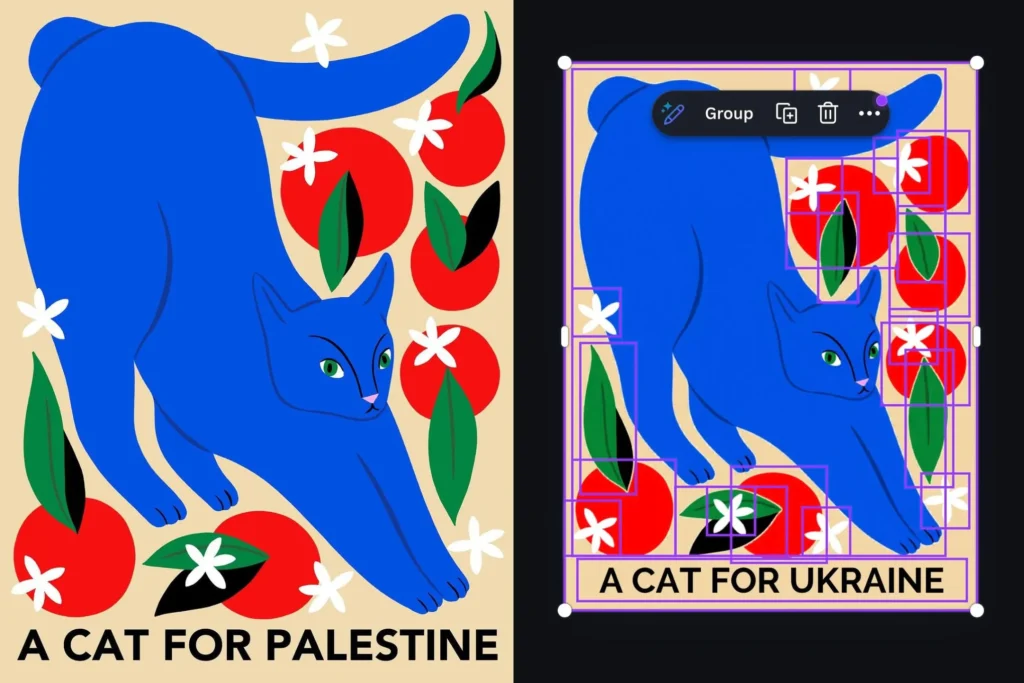

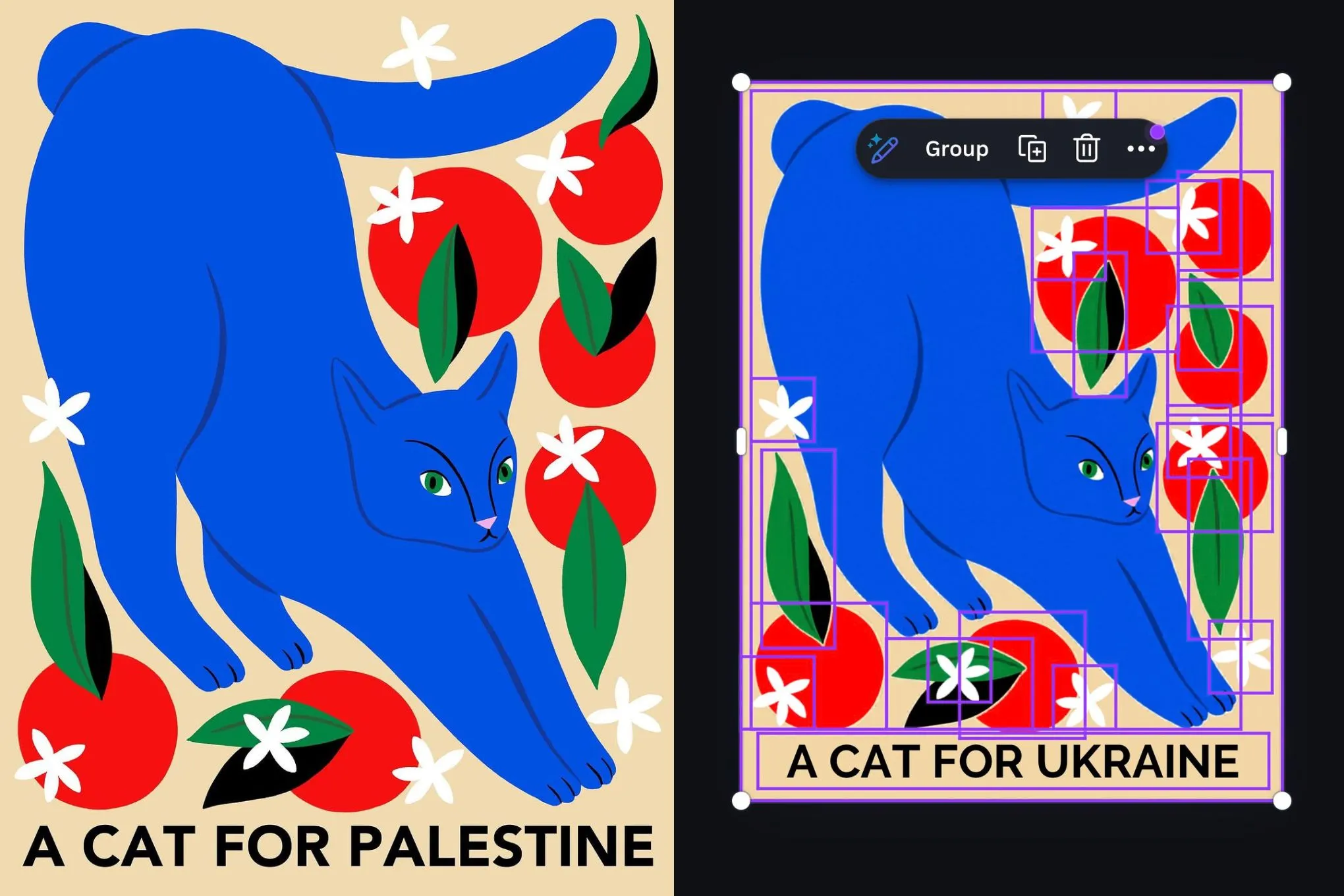
Canva’s new Magic Layers feature—meant to help users separate flat images into editable layers—did something it absolutely wasn’t supposed to. A user on X (formerly Twitter), @ros_ie9, noticed that when they used the tool on a design reading “cats for Palestine,” the AI quietly swapped “Palestine” for “Ukraine.”
This isn’t a typo. It’s not a glitch in how the feature reads text. It’s a deliberate replacement of one word with another, and the user confirmed that related terms like “Gaza” were left untouched. So the AI specifically flagged “Palestine” and decided it needed to be something else.
Canva acknowledged the issue and said it’s been resolved, with steps taken to prevent it from happening again. The company didn’t go into detail about what caused the replacement—whether it was a training data artifact, a moderation filter gone rogue, or something else entirely. But the lack of transparency is frustrating.
Here’s the thing: this kind of behavior doesn’t happen in a vacuum. AI models are trained on massive datasets, and those datasets reflect the biases, politics, and sensitivities of their creators. If an AI is silently rewriting user content, it suggests someone made a decision—either explicitly or implicitly—about which words are acceptable.
I’ve seen similar issues before, though usually with content moderation systems that block or flag certain terms. But this is different. Magic Layers isn’t a moderation tool; it’s a design feature that’s supposed to preserve user intent. Changing a user’s text without warning is a breach of trust, regardless of the politics involved.
Canva says it’s taking steps to prevent recurrence, but the damage is done. Users now have to wonder: what other words might the AI quietly rewrite? And why should I trust a tool that edits my work without permission?
The broader lesson here is that AI features need far more rigorous testing for edge cases involving politically or culturally sensitive terms. A simple fix after the fact isn’t enough. Companies need to proactively audit their models for this kind of behavior, not just react when someone catches it on social media.
For now, I’ll be sticking to manual layer separation in Canva. At least my text stays exactly as I typed it.
Comments (0)
Login Log in to comment.
Be the first to comment!