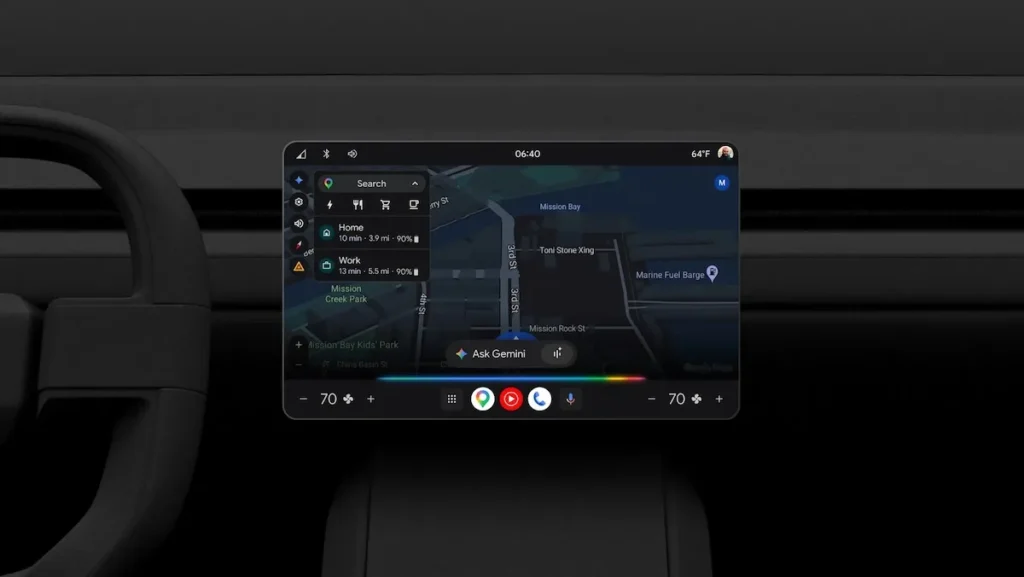

Google’s Gemini AI assistant is officially hitting the road. Starting later this year, the company is rolling out its conversational AI to millions of vehicles from partners like Mercedes-Benz, Volvo, and Nissan. The announcement came alongside a broader push to embed Gemini deeper into Android Automotive, Google’s in-car operating system.
What does that actually mean for drivers? Instead of the stilted, command-based interactions we’ve all gotten used to—”Navigate to nearest gas station”—Gemini is supposed to handle more natural back-and-forth. You could ask it to find a coffee shop along your route that’s dog-friendly, and it’ll follow up with questions about brew preference or estimated detour time. It’s the kind of fluid conversation you’d expect from a passenger, not a GPS.
Google’s been trying to make in-car assistants less robotic for years. The original Google Assistant already lives in many cars, but it still feels like shouting at a smart speaker while driving. Gemini’s big selling point is context. It remembers what you just said, can juggle multiple requests in a single sentence, and even taps into Google Maps and Calendar data to suggest routes before you ask.
But here’s the thing: this isn’t just about convenience. Google is positioning Gemini as a way to reduce driver distraction. The idea is that if you can talk naturally, you keep your eyes on the road instead of tapping a screen. That’s a noble goal, but I’m skeptical. Anyone who’s tried to have a nuanced conversation with a current-gen voice assistant knows the frustration when it mishears a command. If Gemini stumbles mid-route, you’re still fumbling with the touchscreen.
The rollout will happen over the air via software updates, so no need to buy a new car. Google says the first vehicles with Gemini will hit showrooms in late 2026, with broader availability in 2027. Mercedes is integrating it into their MBUX system, while Volvo is focusing on their Google-built infotainment. Nissan’s plans are vaguer, but they’re testing it in select markets.
I’ve been messing with Gemini on my phone, and it’s genuinely better than the old Assistant at handling compound questions. But cars introduce noise, speed, and the terror of real-time consequences. Google’s demo showed a driver asking “What’s that building?” while pointing—something the system handled by cross-referencing camera data and location. That’s impressive, but also a bit creepy. Do I want my car constantly analyzing what I’m looking at?
Pricing is still unclear. Google hasn’t said if this will be a free upgrade or tied to a subscription. My guess? It’ll be bundled with Google One or Android Automotive’s premium tier, because nothing says “conversational AI” like another monthly fee.
Look, I’m cautiously optimistic. If Gemini works as advertised, it could make long drives less tedious and safer. But we’ve been promised “revolutionary” in-car assistants before, and most still can’t handle a simple “play something good.” Let’s see if Gemini can actually hold a conversation without needing a reboot.
Comments (0)
Login Log in to comment.
Be the first to comment!