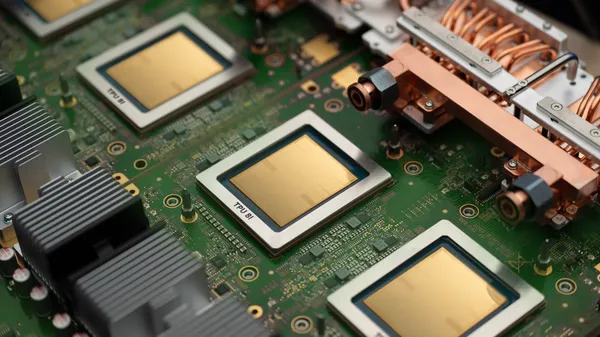

Google just dropped the eighth generation of its TPU lineup, and this time they’re not just cranking up the teraflops. They’re splitting the family into two specialized chips, each aimed at a different kind of workload.
If you’ve been following TPU history, you know previous generations were mostly about scaling up training and inference for large language models. That’s still important, but the company is clearly betting that the next wave of AI won’t just be about answering questions or generating text. It’ll be about agents — systems that plan, reason, and take actions across multiple steps.
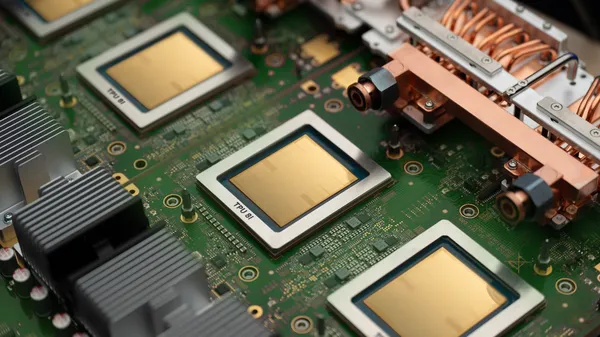
One chip is optimized for training and heavy-lifting inference. Think of it as the workhorse for building and running the biggest models. The other is tuned for lower-latency, higher-throughput inference — the kind you need when an agent is making dozens of calls per second, coordinating tools, and responding in real time.
I’ve been saying for a while that the industry has been treating inference like a one-size-fits-all problem, and that’s just not true. A chatbot can tolerate a couple hundred milliseconds of delay. A trading bot or a robotics controller cannot. Splitting the hardware makes sense, even if it adds complexity for customers who now have to choose.
Google didn’t share raw performance numbers yet, which is a bit frustrating. But the architectural shift is the real story here. They’re acknowledging that agentic workloads have different bottlenecks — memory bandwidth, interconnect speed, and scheduling efficiency — than traditional LLM serving.
The timing is interesting too. We’re seeing a flood of agent frameworks from every major lab, but most of them are still running on general-purpose GPUs. If Google can get these TPUs into production and price them competitively, they could carve out a niche that NVIDIA hasn’t fully addressed yet.
Of course, there’s the usual caveat: TPUs are only available through Google Cloud, so you’re locked into their ecosystem. That’s fine if you’re already all-in on GCP, but it limits adoption for anyone who wants to run agents on-prem or across multiple clouds.
Still, I’m cautiously optimistic. The agentic era needs hardware that doesn’t just scale up, but scales smartly. This is a step in that direction.
Comments (0)
Login Log in to comment.
Be the first to comment!