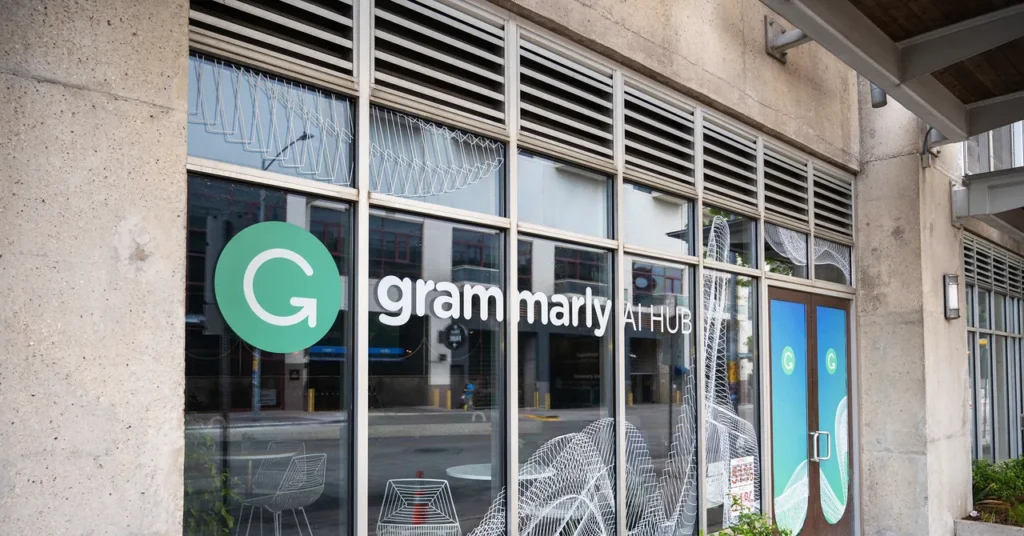

Remember being a teacher’s pet? Or that one professor whose margin notes felt like gold? Grammarly has apparently decided you’d pay for that nostalgia. The company—now rebranded as Superhuman, though the product still says Grammarly—has added an “expert review” feature that lets you get AI-generated feedback from simulated versions of famous writers and academics. Stephen King, Carl Sagan, Neil deGrasse Tyson, the late editor William Zinsser. All available as chatbot personas that will critique your prose.
None of them actually agreed to this. A disclaimer buried in the fine print says: “References to experts in this product are for informational purposes only and do not indicate any affiliation with Grammarly or endorsement by those individuals or entities.” So you’re getting a ghostwritten critique from a ghost. King and Tyson didn’t respond to requests for comment, which I imagine is because they were too busy trying to figure out how to sue.
Grammarly’s been on a generative AI binge for a while now. CEO Shishir Mehrotra announced a company rebrand to Superhuman in October, claiming “when technology works everywhere, it starts to feel ordinary”—which is tech-speak for “we’re adding features nobody asked for.” And they’ve added a lot: an AI chatbot that answers questions mid-draft, a paraphraser, a “humanizer” that adjusts voice, an AI grader that predicts college scores, and even tools to flag phrases that sound too AI-generated. Because of course you need AI to tell you when your AI-written text sounds like AI wrote it.
But the expert review thing is where it gets properly sketchy. The feature doesn’t just give generic LLM feedback—it lists real names. You can pick Stephen King, Neil deGrasse Tyson, or the deceased William Zinsser and Carl Sagan. The AI agents are presumably trained on their actual published work. The legality of that is, to put it mildly, unsettled. There are already multiple copyright lawsuits grinding through courts over this exact kind of content-harvesting.
Superhuman’s senior comms manager Jen Dakin told WIRED that the “Expert Review agent” doesn’t claim endorsement—it just “surfaces expert content” and “points users toward influential voices.” That’s a careful dance around the fact that they’re using dead people’s life work to sell subscriptions without paying a cent to their estates.
Vanessa Heggie, a history of science professor at Birmingham, posted a grim example on LinkedIn. She found that Grammarly offered analysis from an AI agent modeled on David Abulafia, a medieval historian who died in January. She called it “obscene.” Hard to argue with that. C.E. Aubin, a historian at Yale, said the feature “seems to validate the profound mistrust so many scholars in the humanities have for AI.” Her point is sharper: these aren’t expert reviews because no experts are involved. It’s scholarship reduced to a commodity, with the actual human removed from the equation.
And then there’s the practical question: does any of this actually help? WIRED ran a test and found that the expert bots offered advice like “replace repetition with vivid, varied sentence patterns”—which is the kind of generic writing tip you’d get from a high school textbook. The plagiarism detector didn’t even catch a direct quotation. So you’re getting shallow advice from unauthorized digital puppets of dead people. Great.
This whole thing feels like a product of the current AI gold rush where companies just assume they can take anything and figure out the legal mess later. Grammarly’s expert review is probably not going to survive the inevitable lawsuits, but in the meantime it’s a perfect snapshot of where we are: a tool that simulates expertise by strip-mining the actual experts, then sells it back to you as a feature.
Comments (0)
Login Log in to comment.
Be the first to comment!