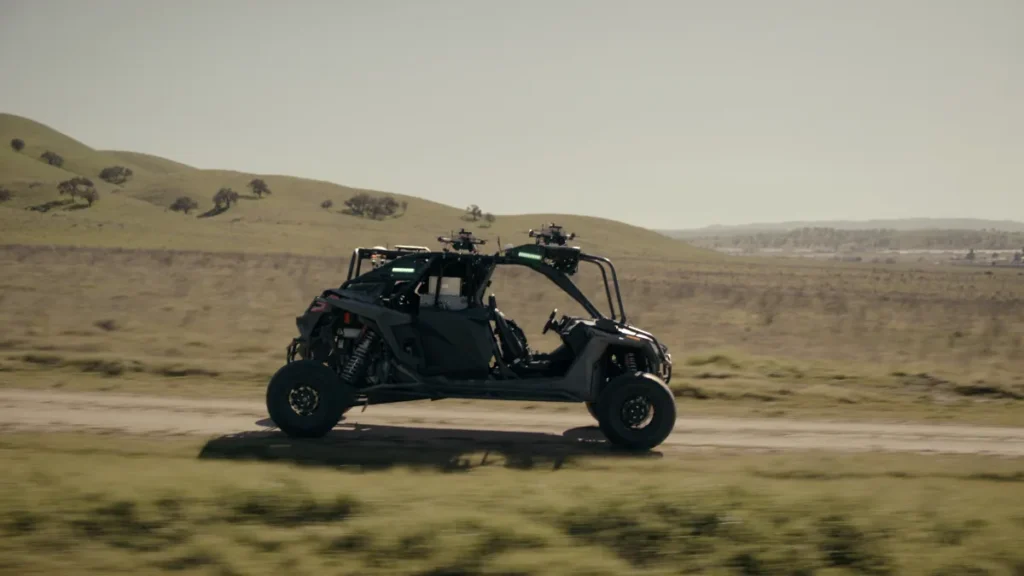

I spent a day at Scout AI’s training ground last week. It’s not a typical startup office. No ping pong tables or kombucha taps. Just dirt, drones, and a lot of nervous energy.
Colby Adcock, the founder, walked me through their setup. The company is building AI agents that let a single soldier control a fleet of autonomous vehicles — drones, ground rovers, maybe even boats. Think of it as a digital lieutenant that handles the coordination so the human can focus on decisions, not joystick twiddling.
They just closed a $100M round. That’s a serious war chest for a company that’s been relatively quiet until now. The money is going straight into training and infrastructure. They’re renting out old military ranges, buying hardware by the pallet, and hiring engineers who are comfortable with both Python and live ammunition.
The bootcamp itself is revealing. New hires spend their first two weeks running field exercises with actual soldiers. Not simulations. Real mud, real radio chatter, real stress. The idea is to bake in operational context from day one. “We don’t want people building in a vacuum,” Adcock told me. “If you’ve never been under fire, you don’t get to design the fire control system.”
The tech itself is interesting. Scout’s AI uses a mix of reinforcement learning and imitation learning, trained on thousands of hours of military exercise footage. The agent learns to prioritize targets, manage battery life, and reroute around obstacles without waiting for human input. In one demo, a single operator controlled eight drones simultaneously — something that normally requires a team of three or four.
But there’s a darker side here that’s hard to ignore. This is AI for war. Not logistics, not medical triage, but direct combat support. The company is careful with its language — “force multiplication,” “situational awareness,” “reducing cognitive load” — but the end result is more efficient killing. Adcock is open about it. “We’re not building toys. This is about giving our guys an edge when it matters.”
The $100M round is telling. Defense tech is hot again, and the Pentagon is hungry for commercial solutions. But Scout faces real competition from Anduril, Palantir, and a dozen smaller shops. The difference might be focus: Scout is betting everything on the individual soldier, not the command center.
I walked away impressed by the execution but uneasy about the implications. The tech works. The team is sharp. But we’re crossing a line where AI makes life-or-death decisions in real time, and the margin for error is zero. Scout’s bootcamp is producing capable systems. Whether we’re ready for them is another question.
Comments (0)
Login Log in to comment.
Be the first to comment!