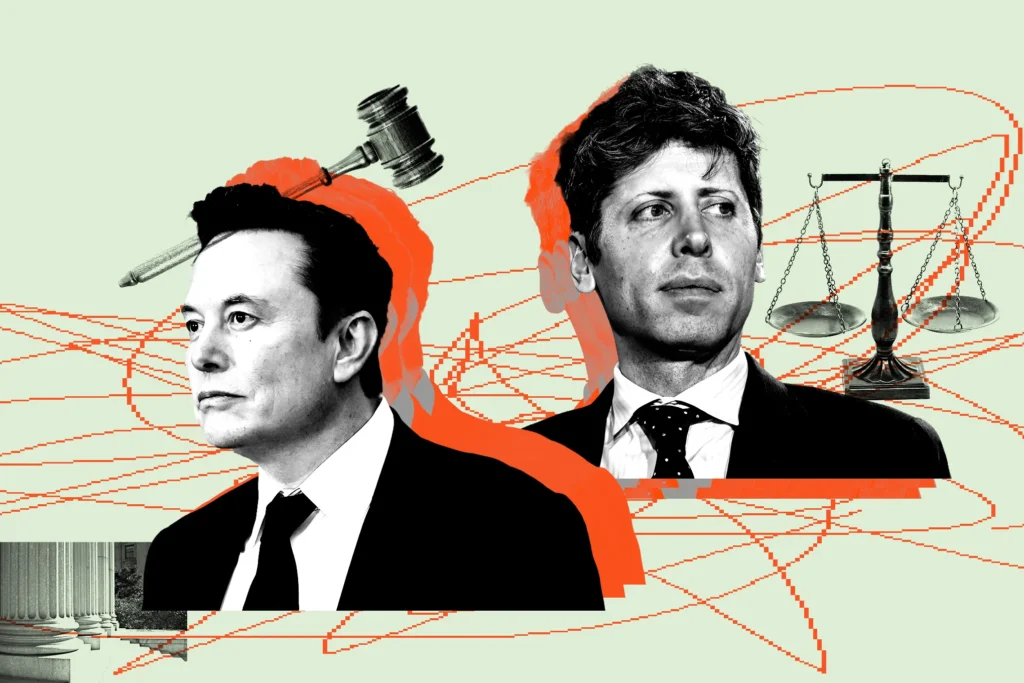

Sam Altman and Elon Musk are about to spend the next few weeks staring at each other across a courtroom. Jury selection kicked off April 27th for Musk’s 2024 lawsuit, and this isn’t just another billionaire spat — it’s a fight over what OpenAI was supposed to be and whether it betrayed that vision.
Musk was there at the beginning. He cofounded OpenAI, wrote checks, and believed the nonprofit mission: build AI that helps everyone, not just shareholders. Now he’s arguing that Altman and Greg Brockman tricked him into funding what became a for-profit machine, all while pivoting to chase revenue instead of humanity’s best interests.
OpenAI’s response is predictably blunt: “This lawsuit has always been a baseless and jealous bid to derail a competitor.” They’re not wrong that Musk now runs xAI, which launched Grok as a direct rival to ChatGPT. The timing is convenient, but that doesn’t make Musk’s core complaint invalid.
The stakes are absurdly high. Musk wants Altman and Brockman removed from OpenAI entirely, the company stripped of its public benefit corporation status, and up to $150 billion in damages funneled back to the nonprofit side. That’s not a typo — billion with a B.
What’s interesting is that Musk dropped the fraud claims right before trial. That feels like a strategic retreat. Fraud is hard to prove, especially when you’re a sophisticated investor who voluntarily wrote checks. But the breach of contract and fiduciary duty claims still stand, and those might resonate better with a jury.
The trial is going to get messy. Discovery already revealed internal emails where Altman and Musk had very different ideas about OpenAI’s direction. Musk wanted tighter control; Altman wanted to scale fast and raise money. The tension was there from day one, and now it’s playing out in federal court.
I’ve seen this pattern before in tech — founders fall out, rewrite history, and sue. But this one matters because OpenAI isn’t just another startup. It’s the company that kicked off the current AI gold rush, and the outcome could set precedent for how AI companies balance mission and profit.
Also worth noting: Musk is a very busy boy right now. Between running Tesla, SpaceX, xAI, and whatever chaos is happening at X this week, he’s got to sit through a trial that could drag on for weeks. That alone tells you how personally he takes this.
OpenAI’s defense will likely focus on the practical reality: building cutting-edge AI costs billions. The nonprofit structure couldn’t attract that capital, so they created a capped-profit arm to fund the research. Musk knew this was happening and didn’t object until he had his own competing product.
But Musk’s counter is simple: you promised one thing and delivered another. And the public benefit corporation label doesn’t change the fact that OpenAI is now licensing its tech to Microsoft, selling subscriptions, and chasing valuation like any other tech giant.
The jury will have to decide whether Altman and Brockman violated a mission statement or just adapted to reality. Either way, this trial is going to generate enough legal filings and hot takes to keep the AI discourse busy for months.
Comments (0)
Login Log in to comment.
Be the first to comment!