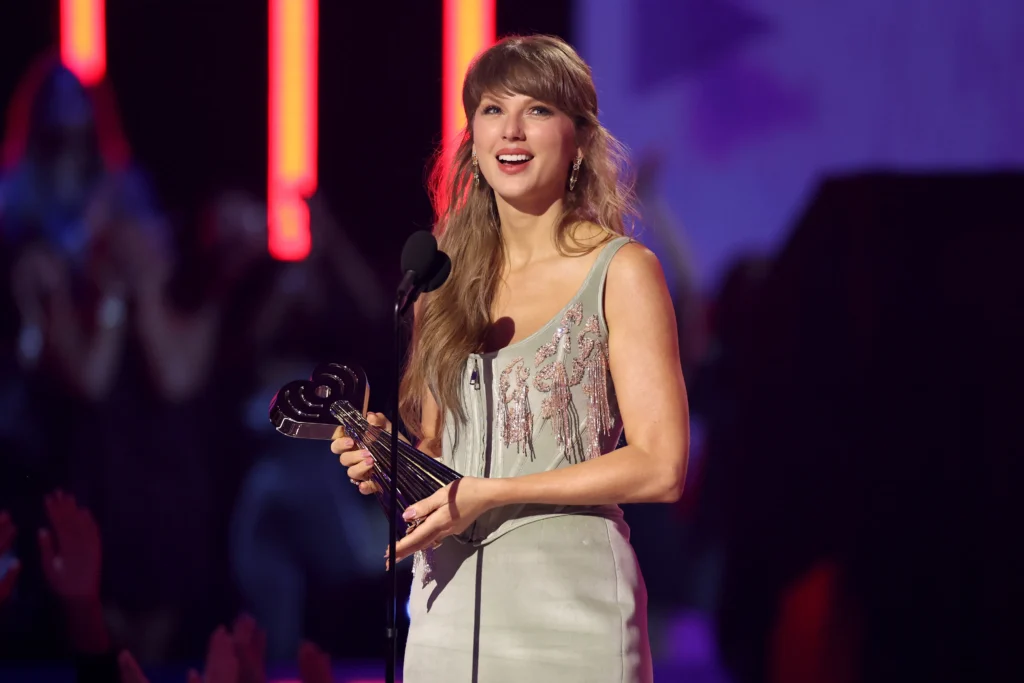

Taylor Swift has been dealing with AI-generated impersonations for years now. We’ve all seen those deepfake tracks that sound vaguely like her, or the chatbots that try to pass themselves off as her. It’s a mess, and she’s had enough.
Her latest move? Filing trademark applications for two spoken phrases: “Hey, it’s Taylor Swift” and “Hey, it’s Taylor.” Her team, TAS Rights Management, submitted audio clips of her saying these lines as part of a promo for her latest album. The idea is to legally own those specific audio snippets so that anyone using them without permission—especially AI systems that generate synthetic versions—could be hit with trademark infringement.
It’s creative, I’ll give them that. But trademark law was never designed to handle this kind of problem. Trademarks protect brand identifiers—logos, slogans, jingles—that help consumers distinguish one product from another. A voice saying “Hey, it’s Taylor Swift” could theoretically function as a brand identifier, like a sonic logo. But the issue is that trademark protection requires ongoing use in commerce and a clear link between the mark and the goods or services. A single promo clip from one album cycle might not be enough to establish that.
There’s also the question of whether a short, generic greeting can be trademarked at all. “Hey, it’s Taylor” is hardly distinctive. It’s a common way to start a voicemail or a video. The US Patent and Trademark Office might reject it on the grounds of being too descriptive or not unique enough.
And even if the trademarks are granted, enforcement would be a nightmare. AI-generated content doesn’t always use the exact same audio clip. It synthesizes new speech that sounds like her but isn’t a direct copy. Trademark law covers confusingly similar uses, but proving that an AI-generated “Hey, it’s Taylor” causes consumer confusion is a high bar. Courts are still figuring out how to apply existing law to generative AI, and the results have been mixed.
This isn’t the first time a celebrity has tried to use intellectual property law to fight AI impersonation. Drake tried something similar with voice rights, and it didn’t go anywhere. The legal system is moving slowly, and technology is moving fast.
I think Swift’s team knows this is a long shot. But it’s also a signal: celebrities are desperate for tools that actually work, and they’re willing to test the boundaries of existing law. If the trademark office approves this, it could set a precedent that opens the door for other artists to claim ownership over their vocal signatures. If it gets rejected, it just confirms what we already know—the law isn’t ready for this.
Either way, it’s worth watching. Swift has the resources to push this through the courts, and she’s not afraid to fight. But I wouldn’t hold my breath for a quick win. This is going to take years, and by then, the technology will have moved on again.
Comments (0)
Login Log in to comment.
Be the first to comment!