
In the first 24 hours of the assault on Iran, the US military struck more than 1,000 targets. That’s nearly double the scale of the “shock and awe” attack on Iraq over two decades ago. The difference isn’t just better bombs or more planes. It’s AI.
Chief among the systems driving this acceleration is the Maven Smart System. If you’ve followed defense tech at all, you’ve probably heard the name. But the full story of how it went from a fringe experiment to the backbone of modern targeting is wilder than most people realize.
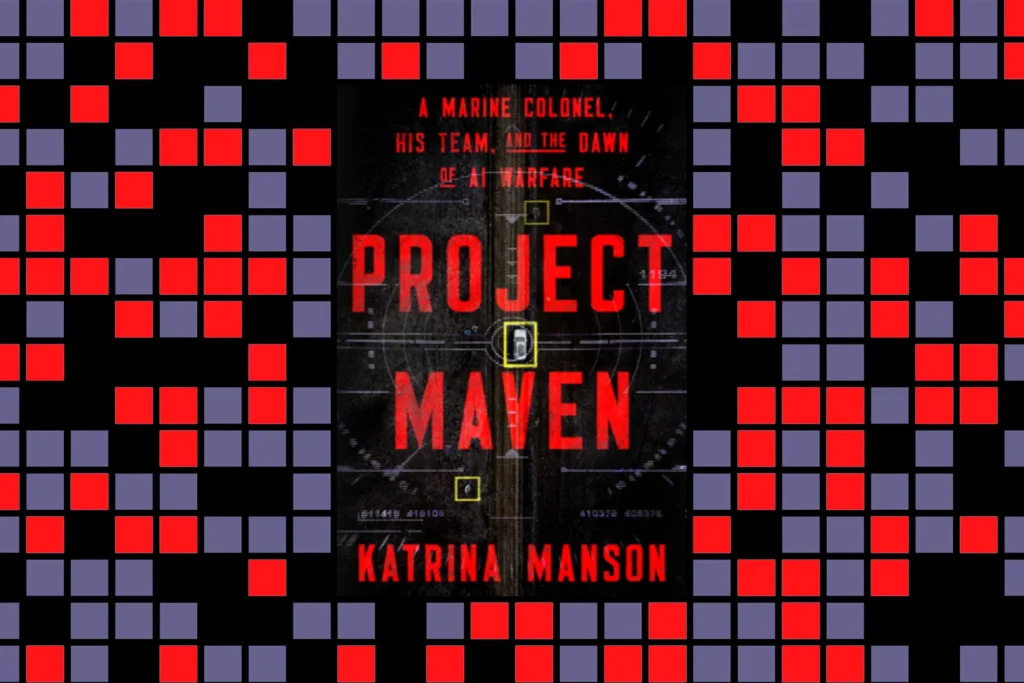
Journalist Katrina Manson just published a book on it: Project Maven: A Marine Colonel, His Team, and the Dawn of AI Warfare. I got my hands on a copy, and it’s the first time anyone has really laid out the messy, contentious, and frankly impressive evolution of this project from 2017 to today.
The origin story is well-known by now. Project Maven started as an experiment in applying computer vision to the endless hours of drone footage the military was collecting. Humans can’t watch all that video. AI can. But the initial contractor was Google, and when employees found out their company was helping the military kill people more efficiently, they revolted. The protests forced Google to pull out of the contract entirely.
That’s where most people’s knowledge ends. But Manson’s book picks up from there and shows how the military essentially said “fine, we’ll do it ourselves.” A Marine colonel and a small team took the concept, rebuilt it, and scaled it into something far more capable than Google ever would have built.
The numbers in the book are staggering. In the Iran assault, Maven didn’t just speed up targeting by a few percent. It compressed processes that used to take days into minutes. The 1,000-target first day was only possible because the system could ingest intelligence from multiple sources, cross-reference it with real-time drone feeds, and present actionable targets to commanders faster than any human team could.
Is this terrifying? Yes. But it’s also the reality of where military tech has been heading for decades. The difference is that now it actually works.
What I find most interesting about Manson’s reporting is how she handles the moral questions without getting preachy. She lets the facts speak. The Google employees had a point. The military had a need. The engineers who built Maven genuinely believed they were saving lives by making targeting more precise and reducing collateral damage. Whether you buy that argument or not, the technology is here to stay.
The book also reveals just how much the military learned from the Google debacle. They realized they couldn’t rely on Silicon Valley’s goodwill. So they built their own AI pipeline, trained their own models on classified data, and created a system that doesn’t depend on corporate partners who might walk away when things get controversial.
That’s actually a smart move from a national security perspective. But it also means there’s even less public oversight of how these systems are used. Google had internal ethics boards. The Pentagon has classified programs.
If you care about where AI is actually being deployed in the real world, not just in chatbots or image generators, this book is essential reading. Manson doesn’t sugarcoat the brutality of modern warfare, but she also doesn’t pretend we can uninvent this technology. The genie is out of the bottle, and it’s running on Maven.
Comments (0)
Login Log in to comment.
Be the first to comment!